Research assistants conduct field work: recruiting participants,
conducting interviews and working with the data. In addition to acquiring valuable
data from research participants, some research assistants help with transcription,
statistical analysis, audio analysis and development of publicity and outreach
materials for the project.
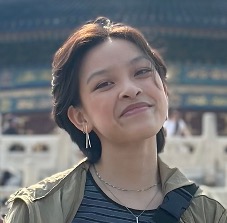
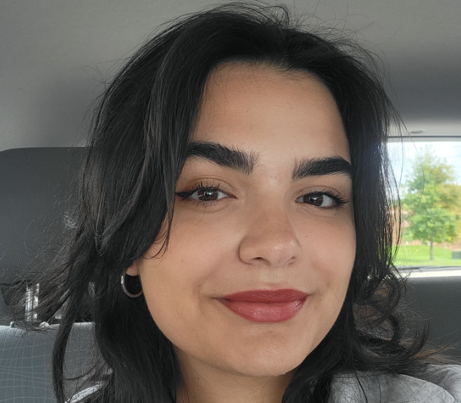
Sophia Leung sinhangsophia dot leung at mail dot utoronto dot ca more information
As a Cantonese homeland speaker who grew up in Hong Kong, I was excited by the opportunity to learn about my language through a different lens. Being miles away from my hometown, I did not expect I could connect to my language and culture in academic settings. When I first learned about HLVC and its Cantonese project, I immediately saw it as a meaningful way to connect my linguistic background and lived experience with academic research!
Working with HLVC has been a valuable opportunity for me! As an undergraduate student, being involved in an ongoing project has given me a much clearer sense of what research looks like in practice. Although it took time to adjust to the workflow, my involvement with HLVC has helped me develop hands-on research experience and a deeper understanding of how linguistic research is conducted.
I also find HLVC especially meaningful because the lab investigates the languages spoken by communities in Canada, acknowledging the country’s linguistic diversity and multiculturalism. This focus bridges my academic background in both linguistics and geography, and I hope to continue contributing to research projects like HLVC!
I am a heritage speaker of Cantonese who graduated from the University of Toronto with a specialist degree in Linguistics and a major in German. As an incoming PhD student at Trinity College Dublin, I will be working on the documentation of Nthenyi (Northern Rengma), an endangered language of Northeast India. My work with the HLVC combines my passion for my own heritage language and my commitment to language documentation and revitalization.
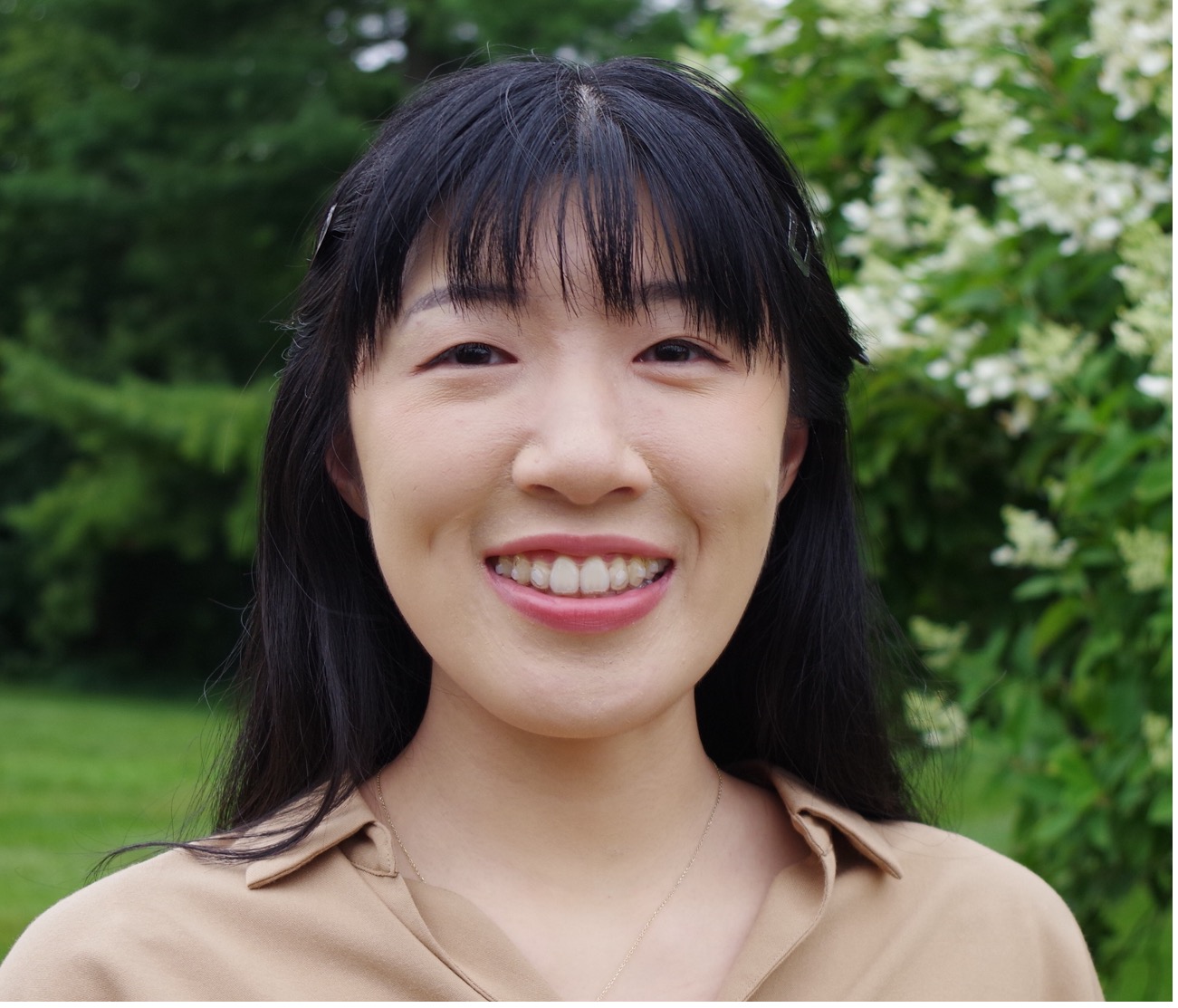
Irene Zhuang irene dot zhuang at mail dot utoronto dot ca more information
Irene is an incoming MA student in Linguistics at UofT. She completed her undergraduate degree with a specialization in Linguistics and a major in Psychology, and is interested in language contact, phonological variation, and Chinese syntax. She is a heritage speaker of Mandarin, Cantonese, and Hakka.
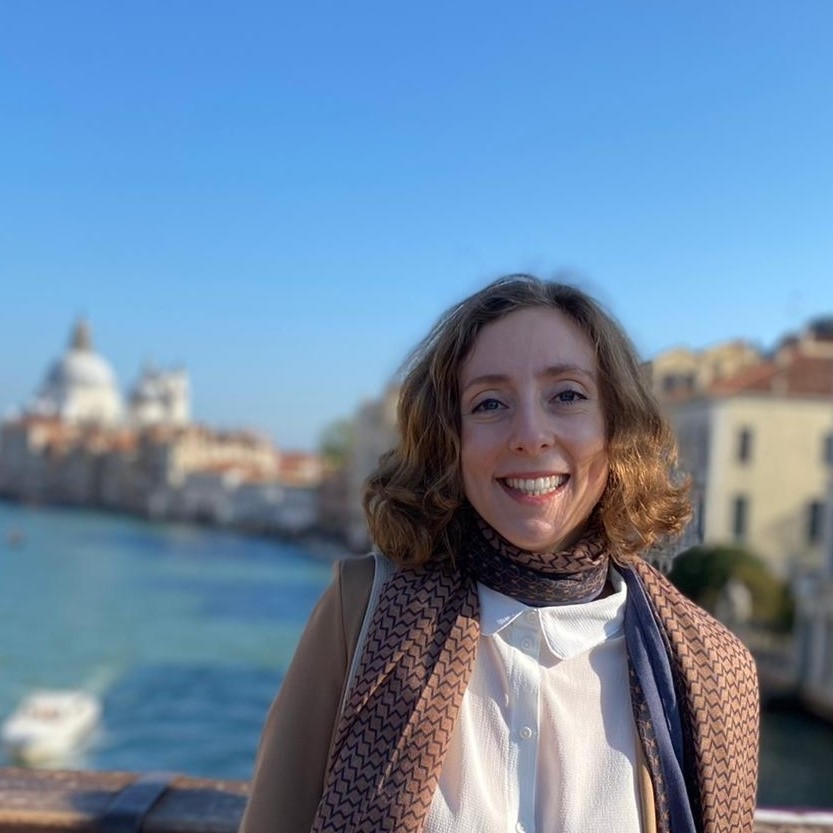
Lauretta Cheng lauretta dot cheng at utoronto dot ca more information
Lauretta is a researcher on the HLVC Project with a PhD in Linguistics from the University of Michigan. Her interests are in sociophonetic cognition and language identity and attitudes, particularly on the topics of Asian American/Canadian speech, native speaker ideologies, and Cantonese sound change. She grew up in Vancouver, BC with Cantonese as a heritage language.
Arthur Kao efngpons dot Kao at mail dot utoronto dot ca more information
Arthur is currently pursuing a Specialist in Linguistics and a Minor in Portuguese at the University of Toronto. He was born and raised in the Vancouver area in a predominantly English and Mandarin speaking household, and later learned his heritage languages Hokkien and Cantonese as a teenager. He also speaks Portuguese fluently and has studied Korean, Spanish, Hindi, Japanese and French. Arthur first joined HLVC using his Portuguese knowledge to code phonetic data and continued to contribute to later projects in Cantonese. His continued work in HLVC has strengthened and deepened his growing interest in the documentation, preservation and analysis of heritage languages.
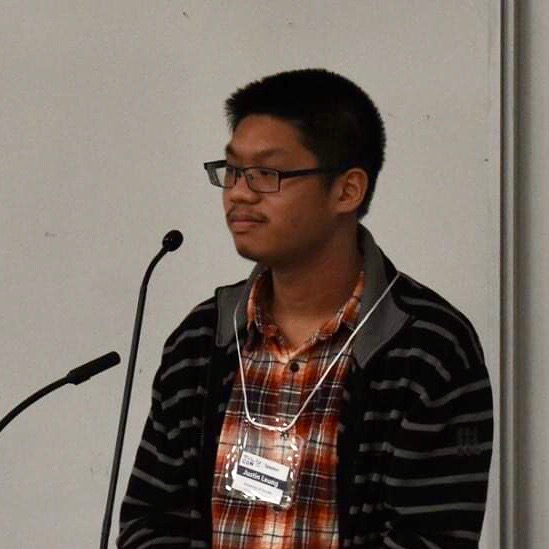
Justin Leung Justinr dot Leung at mail dot utoronto dot ca more information
Justin is a PhD candidate in Linguistics at U of T. His main interest is in morphosyntactic variation and change, especially in Cantonese, his heritage language, and what it can reveal about the robustness/vulnerability of grammatical structures. In 2021 he completed his MA, working on a project to investigate the expression of motion events in heritage Cantonese, looking at it from sociolinguistic and typological perspectives. Learn more at his website
Faetar
Reed Szabo reed dot szabo at mail dot utoronto dot ca more information
Reed just completed his undergraduate degree majoring in linguistics and cognitive science. A bilingual French and English speaker, he is interested the intersection between language revitalization and formal linguistics. He is currently working on the Francoprovençal project analyzing syntactic variation between homeland and heritage varieties.
Adriana Ojeda Beltran adri dot ojeda dot beltran at mail dot utoronto dot ca more information
Adriana Ojeda Beltran is an undergraduate student at the University of Toronto, majoring in Linguistics and minoring in Anthropology and Art History. She was born and raised in Mexico and speaks Spanish, Italian and French. She is interested in language documentation and revitalization in minoritized communities, from a sociolinguistics perspective. Currently contributing to the Francoprovençal project.
Jeremy Tam jeremym dot tam at mail dot utoronto dot ca more information
Jeremy is a third-year undergraduate student pursuing a Computer Science specialist and a minor in Statistics. He is interested in phonology, phonetics, computational linguistics, and low-resource languages like Francoprovençal and its varieties. Jeremy spoke heritage Cantonese when he was a child growing up in Vancouver and also learned French and Italian in his education.
Silas Busby silas dot busby at mail dot utoronto dot ca more information
Silas is an undergraduate student majoring in Linguistics and Philosophy. Natively bilingual in English and French, and learning Italian, they have long been curious about language and its ability to remain a useful medium of communication while being incredibly variable. Their philosophical interests include Hegel, the Frankfurt School, Les Incorromptibles, and normative ethics.
Claudia Graniero claudia dot graniero at mail dot utoronto dot ca more information
I am a PhD student at the Centre for Medieval Studies at the University of Toronto. My main research area is Dante and imperial politics in his works. I studied linguistics in my BA in Classics at the University of Bologna. I am participating in HLVC because my hometown in Italy is Faeto, one of two small towns where Faetar is spoken. I therefore hope that my knowledge of Faetar and Italian, my native language, will be useful to the project.
Gray Warriner g dot warriner at mail dot utoronto dot ca more information
Having been interested in linguistics since they can remember, Gray has a broad knowledge of grammatical concepts picked up from languages as distinct as Arabic, Hungarian, and Korean. With knowledge of French, Italian, Spanish, German, Portuguese, Polish, and (as of this year) Catalan. They especially focus on the comparison between the Romance languages. Since the summer of 2023, they have been contributing their knowledge of these languages and their grammar in order to help organize and transcribe Faetar as part of the HLVC project.
James Torangeau j dot torangeau at alumni dot utoronto dot ca more information
Hungarian
Marcell Maitinsky marcell dot maitinsky at mail dot utoronto dot ca more information
Marcell is an MA Linguistics student investigating phonetic and phonological variation and change in Heritage Hungarian. He maintains additional interests in the phonetics of emerging technologies, such as voice-user interfaces, and in historical language contact in Northern Eurasia.
Athena Manousakas athena dot manousakas at mail dot utoronto dot ca more information
Athena is a second-year undergraduate student specializing in Linguistics with a minor in Spanish. As a heritage speaker of Hungarian and a native speaker of Greek, she hopes to bring a multilingual perspective to her academic work. Her interests lie in cross linguistic comparison and the study of language variation and change.
Italian
Costanza Vallicelli Costanza dot Vallicelli at mail dot utoronto dot ca more information
Costanza is a PhD student in Linguistics at U of T. She is interested in morphosyntactic variation and change in heritage languages, with a focus on Heritage Italian. Her research explores how variationist and experimental methods can be combined to improve our understanding of language acquisition in the presence of intense language contact. Her work further investigates the role of standardization and language ideology in language maintenance and language shift.
Francesca Lisi Francesca dot Lisi at mail dot utoronto dot ca more information
I am a fourth-year undergraduate student at UofT who discovered the HLVC team more than a year ago through the work-study program here at the university! As I was born and raised in Italy, specifically in Apulia, and as I speak both Italian and my region's dialect (one of the many), Apulian, I wanted to join HLVC to not only stay close to my roots, but also provide my language skills in both the Faetar and Italian projects. Additionally as most of the work so far as been focused on independent research, altogether, HLVC has allowed me to gain meaningful experience in this area which I can apply in my other fields of study!
Korean
Polish
Xinyu Liao Xinyuleslie dot liao at mail dot utoronto dot ca more information
Xinyu Liao is a PhD student in Linguistics at UofToronto. He is interested in phonetics, laboratory phonology, and computational psycholinguistics, with a special focus on variation. His research combines experiments, naturalistic corpora, psycholinguistic methods, LLM, and computational modelling to investigate the cognitive encoding and adaptability of speech sound variation in human memory and language evolution/typology. At HLVC, he is now working on computational modelling of optimality theory on phonological variation in heritage languages.
Portuguese
Russian
Eliana SanFilippo eliana dot sanfilippo at mail dot utoronto dot ca more information
Eliana is an undergraduate student at the University of Toronto specializing in Literature and Critical Theory and majoring in linguistics. She is interested in contact-based variation and change in Slavic languages, particularly among languages in the Balkan sprachbund. She is a heritage Russian speaker and currently working her way through BCS and Macedonian.
Tagalog
Reign Lapuz reign dot lapuz at mail dot utoronto dot ca more information
Reign is a psychology student in the co-op stream who grew up in the Philippines and moved to Canada in 2014. Her interests focus on how language, culture, and memory shape the way people express themselves and understand one another, especially across different cultural contexts. Drawing from her own experiences, she is particularly interested in how meaning lives not only in words, but also in everyday cultural touchpoints such as food, music, and shared memory, from sinigang to OPM songs like Spoliarium by the Eraserheads.
Jean Patrick Vidad jean dot vidad at mail dot utoronto dot ca more information
Jean Patrick is an undergraduate student who is pursuing a double major in English and Journalism. He was born and raised in the Philippines and moved to Canada when he was 14. He is particularly interested in seeing the differences in speech patterns amongst Tagalog speakers elicited by a conversational interview.
Ukrainian
Editing, web design, analysis, PR, etc.
Hilary Walton Hilary dot Walton at utoronto dot ca more information
Hilary is the Lab Manager for the HLVC Project. She is a postdoctoral researcher in the Linguistics Department. Her research focuses on the role of linguistic identity in the realization of indexical features by heritage language speakers.
Omar Al-Rawi Omar dot Alrawi dot mail at utoronto dot ca more information
Omar Al-Rawi is a recent graduate from the University of Toronto, where he studied linguistics and computer science. His research interests lie at the intersection of these fields, particularly in applying computational methods to advance linguistic research, and integrating knowledge from linguistics to enhance computational approaches in natural language processing.